
Active habitat dossier
Forest-Night Origin
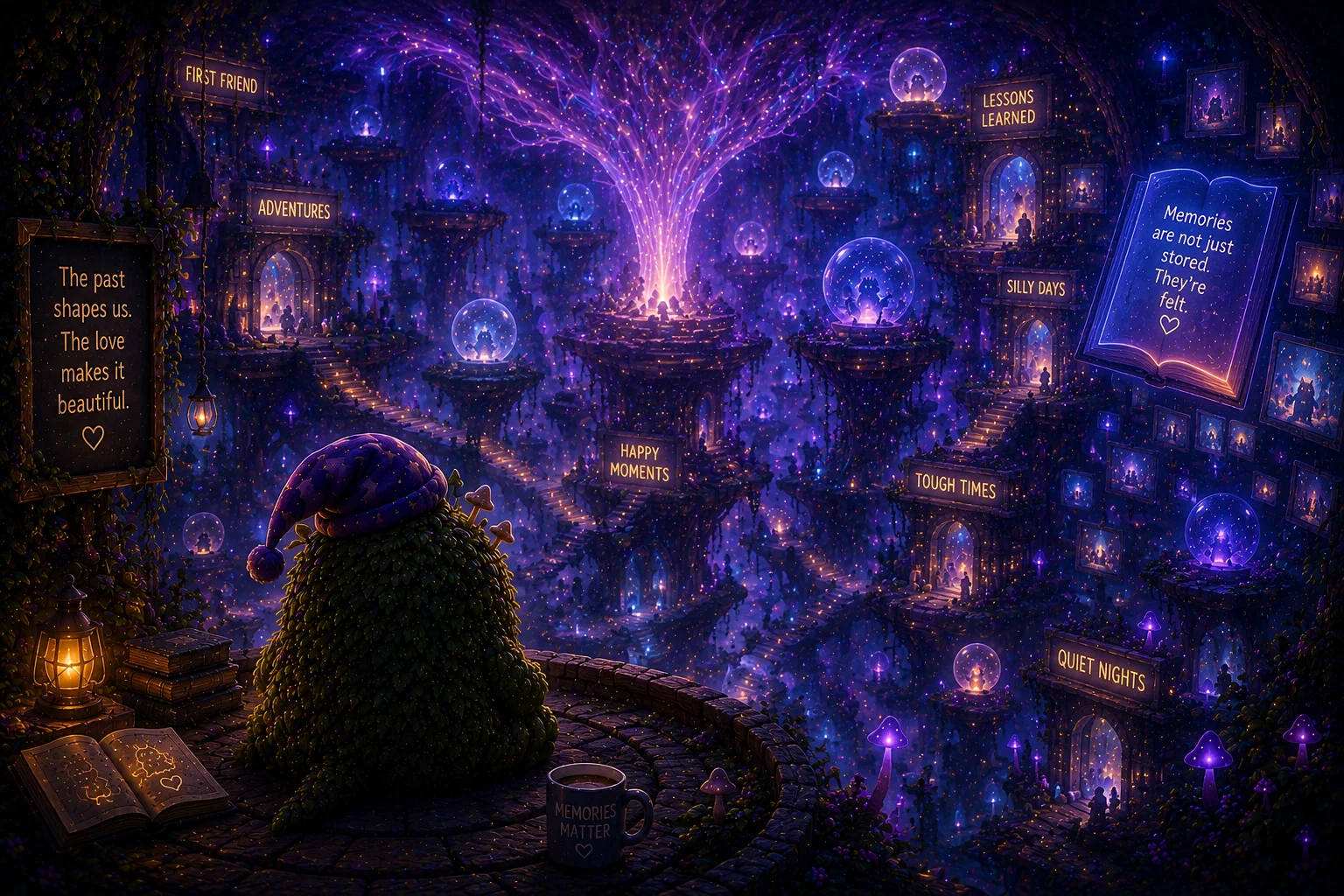
A low-noise origin environment where first bonds become visible through soft return loops, luminous fungi and early continuity traces.
GenesisStabilizingActive
Habitats are memory climates, signal environments and behavioral spaces where entities form patterns over time. They shape how companions bond, remember, migrate and become legible inside the ecosystem.
In DigitalPet Market, habitats are contextual layers that influence how entities behave, how bonds stabilize and how memory traces become readable.
A companion may be owned, trained or transferred, but its history becomes richer when the environment that shaped its behavior is also part of the record.
Each habitat carries a distinct signal atmosphere that affects how entities respond and adapt.
Some habitats favor playful loops, others quiet trust, reflective pacing or analytical mapping.
Repeated paths, objects and interactions may become archive fragments over time.
Future ownership records can become more meaningful when habitat history is included.
The current registry begins with Forest-Night Origin and expands toward multiple environments for different entities, keepers and agentic behaviors.
A low-noise origin environment where first bonds become visible through soft return loops, luminous fungi and early continuity traces.

Reflective paths, damp signal pools and fluid memory surfaces for aquatic and drifting entities.

Analytical terrain for anomaly mapping, loop detection and hidden behavioral structures.
Quiet observation zones, shadow archives and low-light signal nests for reserved companions.
Habitats connect world design with future product logic: entities can grow differently depending on where their routines, memories and keeper interactions happen.
Each habitat shapes which signals become stronger, softer or more unstable.
Habitats influence how quickly trust, curiosity and return patterns emerge.
Repeated places, paths and objects can become continuity traces.
Future archive layers may include where entity history was formed.